Archive | December 2013

Antibiotics in animal agriculture – what’s the latest?

Back in my days working with the Union of Concerned Scientists (UCS), I was highly tuned in to the issue of antibiotic use in animal agriculture. In short, the majority of antibiotics produced in the United States are used for livestock, and not just as a treatment for sick animals, but as a low-dose feed additive to help them gain weight. In 2007, I helped organize two Hill briefings on the Preservation of Antibiotics for Medical Treatment Act (PAMTA), which sought to ban non-therapeutic use of medically important antibiotics in raising animals for food. PAMTA was reintroduced by Louise Slaughter (the resident microbiologist in Congress) in May 2013 and holds the support of over 450 organizations, including the American Medical Association, the World Health Organization, and the National Academy of Sciences. Basically, everyone in the medical field agrees that antibiotic resistance is a major public health issue and that overuse of key antibiotics in livestock contributes to a loss of effectiveness for human use.

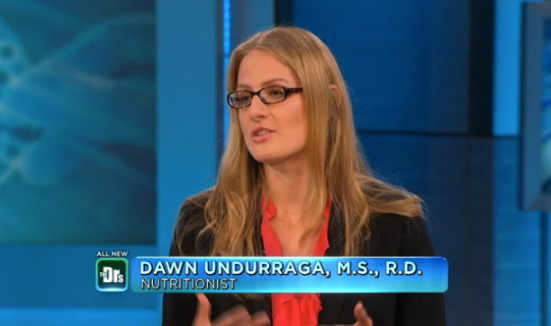
I haven’t kept very close track of the issue in recent years, but I was happy to see it gaining traction in the latter half of 2013. Even moreso, I was thrilled that my friend and Tufts Friedman School classmate Dawn Undurraga had the opportunity to appear in an “Animal Antibiotic Debate” on the daytime talk show The Doctors. Dawn also co-authored an Environmental Working Group report titled Superbugs Invade American Supermarkets, which demonstrates unsettling levels of antibiotic-resistance bacteria in supermarket meat.
DawnDrs

While watching the video of this debate, I was surprised to hear Dawn’s opponent, Dr. Scott Hurd, say that the “growth promotion” use of antibiotics on the farm will “soon disappear.” That would certainly be a good thing – except that his statement was most likely based on the voluntary industry guidance that the Food and Drug Administration (FDA) released on December 11, covering the use of antibiotics in livestock feed and water. The guidance document asks pharmaceutical companies to remove growth promotion indications – such as “increased rate of weight gain” or “improved feed efficiency” – as allowable uses on the labels of animal drugs. However, it also contains this disclaimer up front:

FDA’s guidance documents, including this guidance, do not establish legally enforceable responsibilities. Instead, guidances describe the FDA’s current thinking on a topic and should be viewed only as recommendations, unless specific regulatory or statutory requirements are cited.

In other words, the livestock and pharmaceutical industries have no legal incentive to comply (although many companies have already indicated that they will take the voluntary measures). Some groups are worried that FDA’s guidance document will ultimately make the situation worse, as it will serve as a diversion from PAMTA and other legal action on the issue. It may also encourage a shift in the way antibiotic use is tracked – low-dose feed additives previously used for growth promotion might get reported as being used for illness prevention instead. I am doubtful that FDA’s guidance will result in a significant decrease in antibiotic use on livestock farms. Industry doesn’t seem worried about this guidance, but I believe that we would see vast industry push-back if a binding law was passed to truly limit low-dose antibiotics in animal feed/water.

Antibiotic resistance is very scary and needs to be addressed head-on. The Centers for Disease Control (CDC) released a report in September that clearly implicated animal antibiotic use as a main driver in the spread of resistance. See this infographic from the report:

CDC couldn’t put it more plainly: Antibiotics should only be used to treat infections. Constant, low-dose administration for growth promotion or disease prevention in animals needs to cease. How will the stakeholders proceed in 2014?

Further reading:

Soup-er Simple: Smooth curried broccoli-cauliflower soup

My very favorite thing to whip up in the kitchen is a soothing pot of soup.  Soup is a great culinary canvas for people with any level of skill in the kitchen, from teens just learning to cook from scratch to professional chefs that want to impress their customers. Best of all, soups and stews provide a large amount of satisfying food without crazy amounts of effort or money. Once you master the basic rules of soup, it’s easy to create your own concoctions from whatever ingredients in your fridge are calling out to be used.

I value simplicity, and am guessing that my readers do, too. Hence, I am starting up a series of posts on my blog titled “Soup-er Simple” (pun-tacular!). I’ll post some basic tips for readers who are interested in becoming soup aficionados, and easy recipes for those who just want a quick meal idea. My goal is to create and post recipes that are very much no-fuss – not too many ingredients, no precise measurements, minimal clean-up, etc.

First up – a recipe that I came up with last weekend when I was in need of a quick, filling, and healthy lunch. I had a bag of cut broccoli and cauliflower florets that I did not feel like steaming. So I made them into an incredibly simple soup! An immersion blender makes this one extra easy.

Smooth curried broccoli-cauliflower soup

Vegetarian, vegan, dairy-free, gluten-free. Recipe makes about 4 servings; just double it for more!

Ingredients
1 small or medium onion, chopped
1 large carrot, chopped
1 bag of pre-washed broccoli and cauliflower
1 small potato, chopped/diced
handful of cashews (raw or roasted)
curry powder
olive oil (~2 tbsp)
salt

Cook time: 20 minutes

In a large stainless steel soup pot, sautee the onion and carrot with some olive oil and a solid pinch of salt until tender. Add about 1 tablespoon of curry powder and stir for about 30 seconds until it’s “toasted.” Next, toss in the chopped potato, broccoli/cauliflower florets, and cashews. Add water until the ingredients are just covered. Bring the pot to a boil, then cover and simmer for 10-15 minutes, until all ingredients are tender. Use an immersion blender or regular blender to blend the soup to a moderately smooth consistency. Add salt, pepper, and additional curry powder to taste.

This makes a great lunch or appetizer for a dinner party!

BroccoliSoup1   BroccoliSoup2

The Basics: Food Safety vs Food Security

My career has focused on issues of both food safety and food security – two concepts that sound extremely similar but are actually quite different. My family members often get them mixed up and can’t remember which is which, so I thought I’d lay out the definitions to help clarify. I’ll be discussing topics within both disciplines on my blog, so best to get the basics out of the way!

Food Safety

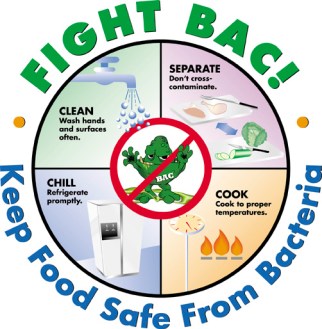
The discipline of food safety deals with the proper handling, preparation, and storage of food with the goal of preventing foodborne illness. Foodborne illness (aka “food poisoning”) may be caused by bacteria, viruses, molds, parasites, heavy metals, or contaminants that make our food unsafe to eat. You’ve probably heard of some of the most common foodborne pathogens: Salmonella, E. coli, Norovirus, etc. Food safety standards and processes are very important all along the supply chain from the farm to your table. When a food company discovers that one of its products is unsafe, it may recall that item. Unfortunately, minor food safety incidents are ubiquitous – we’ve all experienced the tummy aches or worse – but standards and inspections are in place in the United States to guard against major issues. Of course, fresh food can never be 100% insulated from pathogens, and so the consumer needs be conscious of some basic safety rules such as proper cooking, storage, and reheating temperatures.

The heading of food safety also includes food defense, which is the protection of our food supply from criminal or terrorist interference.

Food safety resources:

  • FoodSafety.gov – A U.S. federal government site that contains recall information, food poisoning basics, and tips on how to keep your food safe.
  • Food Safety News – A robust online newspaper covering the latest news and views from the food safety beat.
  • Codex Alimentarius – International food safety standards that influence trade.

Fight BAC graphic from the Partnership for Food Safety Education

Food Security

Food security is more closely aligned with what you may think of when you hear the word “hunger.” If you or your household are food secure, you have a consistent, adequate supply of safe and nutritious food for an active lifestyle. If you are food insecure, then you have a limited or uncertain ability to acquire the food you need to be healthy and active.

Food security is generally seen as having four dimensions:

  • Availability – Adequate supply of foodstuffs to meet the population’s needs
  • Access – Ability to purchase/acquire food when needed
  • Utilization – Knowledge of how to prepare and consume food to enhance nutrition and reduce food safety risk
  • Stability – Consistency of the other three dimensions over time

Improving food security is not just a matter of providing food aid to the poor (in the form of actual food or money to purchase food), although this type of aid is very important in times of famine or disaster. International development organizations, governments, and non-profits need to work together to establish good policies, markets, and supply systems that allow all people to produce and/or purchase the food they need. Food security is intimately linked with issues of economic growth, nutrition, and natural resource management, among others.

Although many people think of hunger and food insecurity as problems that reside in developing countries, they are real problems in the United States as well. The U.S. Department of Agriculture estimates that 14.5 percent of American households were food insecure at least some time during the year in 2012.

Once you know the term food security, you will start seeing it frequently. With the Earth’s population expected to reach 9 billion by 2050, it seems like everyone is talking about global food security and how to feed the world (which is fantastic!).

Food security resources:

Habiba Tukhtaeva shows off the vegetables she grew in her family’s kitchen garden with support from Feed the Future.

So how are food safety and food security related? You can’t have true food security without food safety – after all, contaminated or unsafe food is certainly not adequate for a healthy and active lifestyle free from hunger. Poor food safety measures can affect the availability of food, since spoiled/unsafe foods should be removed from the supply chain.

After writing this post, I asked my husband how he would describe the difference between food safety and food security. He responded: “Food safety pertains to making sure my food won’t kill me and food security pertains to whether I have enough of it.” Not too bad, hubby! 🙂

A new blog begins

For years, I’ve been wanting to start a public blog to highlight and discuss topics that I find interesting and important. While I have maintained several private/personal blogs off-and-on since high school, and contributed or managed other websites, I’ve struggled to get my own public blog up and running. Twitter has proven an excellent tool for resource sharing and open commentary, but alas, 140 characters doesn’t always allow you to say what you need to say. So what has been stopping me from pulling the trigger on creating a robust, public blog/website? Here are a few of the mental roadblocks I’ve run into:

Topic

My first and most stymieing problem was the fact that I am interested in way too many things. I know that blogs tend to be more successful when they have a narrow focus and develop credibility within a particular subject or style. While I am not looking to become an internet sensation, I would like to maintain a site that has some degree of a following. After all, it’s the comments, shares, and overall engagement that keep bloggers motivated. (If I weren’t looking for engagement, I would just write in my trusty Moleskine.) But my greater question is, can my blog be useful and interesting to people other than myself if it covers multiple topics, from agriculture to music, from journal articles to travel stories?

Site Name / URL

This is a dilemma I’ve wrestled with for ages. Do I need to come up with a catchy name for my blog? And does the URL need to be identical to the site name? It’s near-impossible to define myself or my writing in a single pun or catchphrase. However, after many trips to the thesaurus, I’ve come up with a name that I think rings nicely – Macropath. I’ll explain the thought behind the name in a future post. Of course, Macropath.com is unavailable, so I’m going to stick with a URL I’ve owned for years – juliemac.net.

Theme

WordPress has hundreds of themes to choose from, and frequently adds new options. For the moment I’ve settled on “Bouquet,” but I will forever be on the lookout for the perfect theme that is both attractive and flexible.

Branding

Colors…”feel”… logo… consistent branding… Do I need to worry about any of that? Nah, I’ll save it for later.

Time

I’m a 21st century, career-oriented, active woman trying to maintain my hobbies, health, and relationships.  So when am I supposed to find time to write blog posts? My goal at the outset is to publish one to two posts a week, but if I falter on this schedule, is the endeavor simply futile?

After months of stalling, I finally come to a startlingly obvious realization: it is far better to start building and writing something – anything – than to waste time agonizing over the particulars. If I decide to make massive changes to my blog in the future, so be it. At least I’ll have a blog to make changes to. I’m not ready to declare myself an expert on a particular topic, and I don’t want to put up a jazzy, overly-designed front. Thus, I will let my blog unfold naturally from the competing interests, joys, and priorities that swarm my brain, and see where it takes me. Let the experiment begin!

Have you struggled with similar questions when starting a personal blog or website? If so, let me know in the comments!